.png)

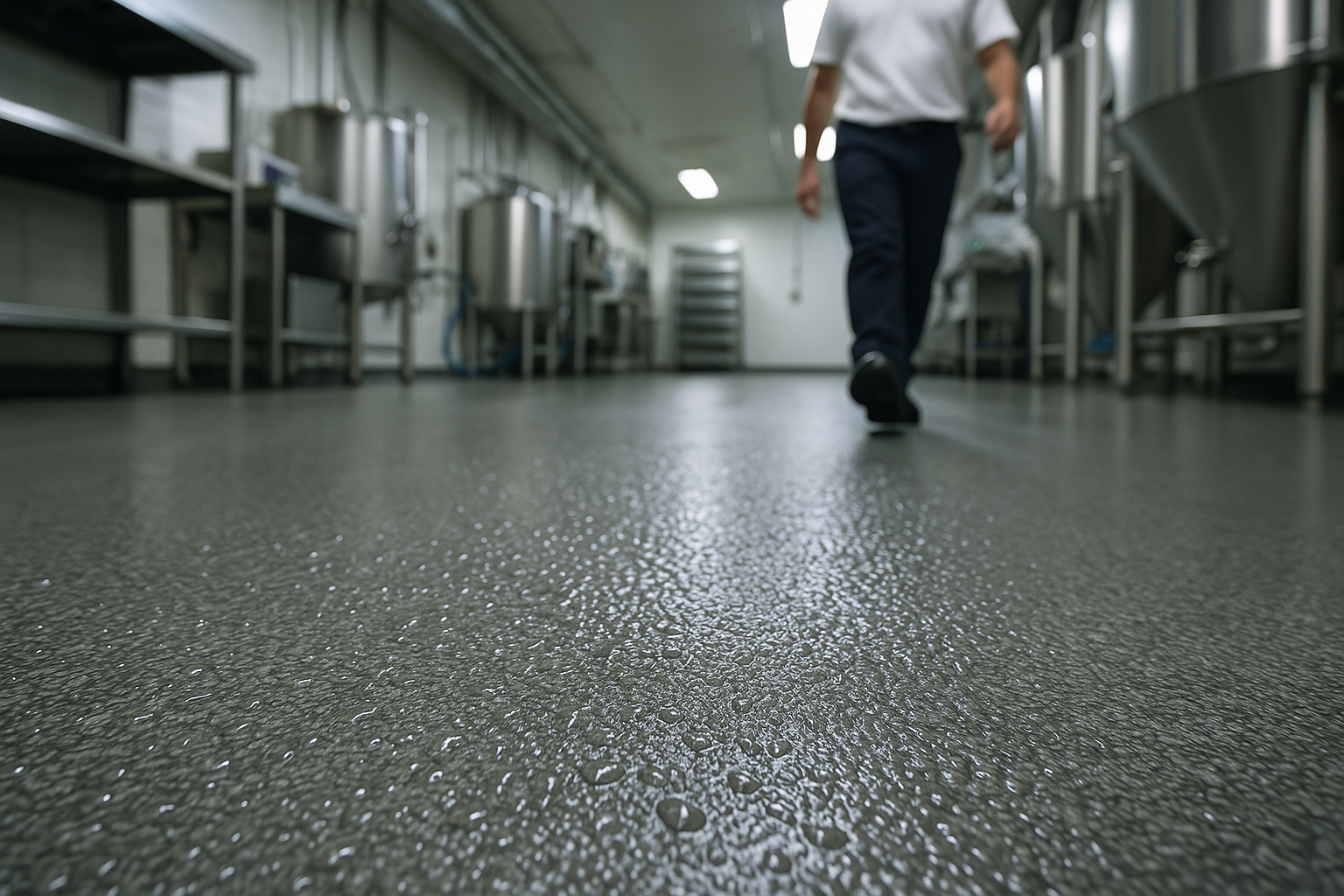
Why Slip Resistance Matters
Workplace safety is more than just signs and protocols — it’s about engineering risk out of the environment. If your floor is too smooth, it doesn’t matter how many “Caution: Wet Floor” signs you place — people are still at risk.
The key metric to watch is COF (Coefficient of Friction). OSHA recommends a static COF of 0.5 or greater, with higher values for areas where moisture, oils, or chemicals are present.
Challenges in Wet or Greasy Environments
Facilities like kitchens, breweries, auto shops, and food plants face unique hazards:
- Constant Moisture: Frequent washdowns or spills
- Oil/Grease Exposure: Makes floors dangerously slick
- Temperature Swings: Can create condensation and slippery spots
- High Traffic: Equipment and foot traffic polish surfaces smooth over time
This combination makes proper flooring selection essential for reducing injury risk.
Epoxy Flooring Solutions for Slip Resistance
Epoxy is highly customizable. We can install:
- Quartz- or silica-broadcast floors for aggressive traction
- Aluminum oxide aggregate systems for heavy-duty, non-slip performance
- Textured topcoats that balance safety with cleanability
- Chemical-resistant coatings that hold up against oils, sanitizers, and degreasers
Polished Concrete and Safety
Polished concrete can also be made slip-resistant by:
- Choosing the correct gloss level (lower gloss = higher traction)
- Applying penetrating densifiers and guard products with grit additives
- Performing regular maintenance to avoid surface contaminants building up
Compliance Benefits
Proper slip-resistant flooring helps meet:
- OSHA requirements for walking/working surfaces
- USDA and FDA regulations for food facilities
- Insurance carrier recommendations for risk reduction
Long-Term ROI
Slip-resistant floors reduce:
- Workers’ compensation claims
- Legal liability exposure
- Downtime caused by accidents
- Employee absenteeism due to injuries
In high-risk industries, flooring upgrades often pay for themselves within a few years.
Our Process at Surface Solutions
- Hazard Assessment: Evaluate moisture, chemicals, and traffic conditions
- Material Selection: Choose epoxy system or concrete finish with appropriate traction level
- Installation: Professional broadcast or trowel application for uniform texture
- Verification: COF testing to confirm compliance with safety standards
Protect Your Team — and Your Bottom Line
📞 Call 877-CSTM-FLR
📧 Email carolina@cstmflr.com
🌐 Visit www.cstmflr.com
A safer floor is a smarter investment. Don’t wait for an accident to make the upgrade.