.png)

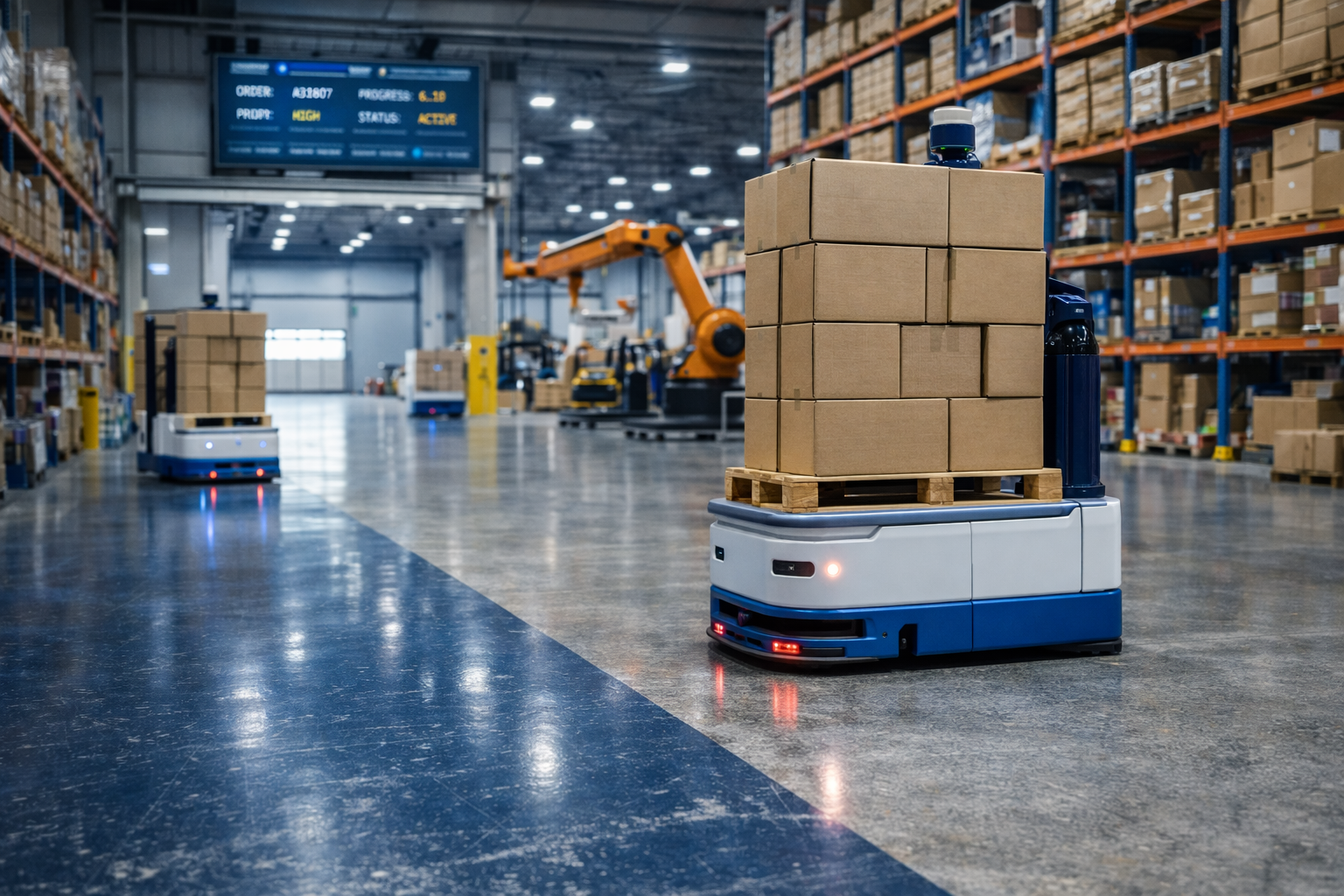
Industrial flooring must perform under constant pressure. Forklifts, pallet jacks, heavy equipment, and nonstop foot traffic quickly expose the weaknesses of the wrong flooring system. When a floor fails, repairs often mean downtime, safety risks, and unexpected costs.
Polished concrete and epoxy flooring are two of the most common solutions used in industrial facilities. While both can improve the appearance of a space, their performance over time differs significantly. Understanding how each system works and where each excels is critical before making an investment.
What Is Epoxy Flooring?
Epoxy flooring is a resin-based coating applied on top of a concrete slab. It creates a sealed, often glossy surface that can resist chemicals and stains when properly installed.
Common reasons facilities choose epoxy include:
- Clean, uniform appearance
- Chemical resistance
- Custom colors and safety striping
However, epoxy remains a surface layer. Under heavy industrial use, that layer is subject to wear, scratching, and eventual failure.
What Is Polished Concrete?
Polished concrete is not a coating. It is a mechanical process that enhances the concrete slab itself.
The process includes:
- Grinding away weak surface concrete
- Applying a densifier to harden the slab
- Polishing to create a smooth, durable finish
Because the final surface is concrete, there is no separate layer to peel, bubble, or wear through.
Durability Under Heavy Traffic
Durability is often the deciding factor in industrial environments.
Epoxy flooring:
- Can wear through in forklift lanes
- Is vulnerable to impact damage
- Requires repairs when the coating fails
Polished concrete:
- Resists abrasion from wheels and equipment
- Handles heavy loads without surface breakdown
- Maintains performance even with constant traffic
Facilities with high daily movement often find polished concrete holds up better over time.
Maintenance and Downtime
Maintenance requirements vary greatly between the two systems.
Epoxy flooring typically requires:
- Periodic recoating
- Repairs to worn or chipped areas
- Shutdowns during curing and repairs
Polished concrete maintenance is simpler:
- Routine cleaning with neutral cleaners
- Occasional burnishing
- Minimal disruption to operations
For facilities where downtime is costly, reduced maintenance is a major advantage.
Cost Considerations Over Time
Initial installation costs do not tell the full story.
Epoxy may appear less expensive upfront, but long-term costs can increase due to:
- Recoating cycles
- Repairs in high-traffic areas
- Production downtime
Polished concrete often delivers lower total ownership cost by:
- Using the existing slab
- Eliminating recoating expenses
- Reducing long-term maintenance needs
Safety and Working Conditions
Both systems can be designed to meet safety requirements, but polished concrete offers added benefits.
Polished concrete:
- Improves light reflectivity
- Reduces dust from concrete breakdown
- Can be customized for slip resistance
These features support safer, more efficient work environments.
Which Flooring Is Right for Your Facility?
Epoxy flooring may be suitable for areas with chemical exposure or lighter traffic. Polished concrete is often the better choice for facilities that prioritize durability, longevity, and operational efficiency.
Warehouses, manufacturing plants, and logistics centers frequently choose polished concrete for its ability to perform without constant intervention.
Both epoxy flooring and polished concrete have their place, but they serve different needs. For industrial facilities facing heavy use and limited downtime, polished concrete offers a durable, low-maintenance solution built for long-term performance.
Choosing the right system starts with understanding how your facility actually operates.